







To choose your first Yixing teapot, decide three things in order: the tea you will brew in it, how many people you usually brew for, and a shape that is easy to use. For most people that means a 150–180 ml pot, in Zhuni if you mostly drink young raw pu-erh or in Zini if you mostly drink ripe or aged pu-erh, with a wide opening and a lid that sits well. Below is a short checklist, the mistakes to avoid and what to check when the pot arrives.
First, do you need one yet?
A Yixing teapot seasons to the tea you brew in it, so it rewards people who drink one style of tea often. If you are still trying many different teas, start with a porcelain gaiwan. It brews every tea well, keeps no flavor and shows you the leaf. Add a Yixing pot once you know which pu-erh you reach for most.
The checklist
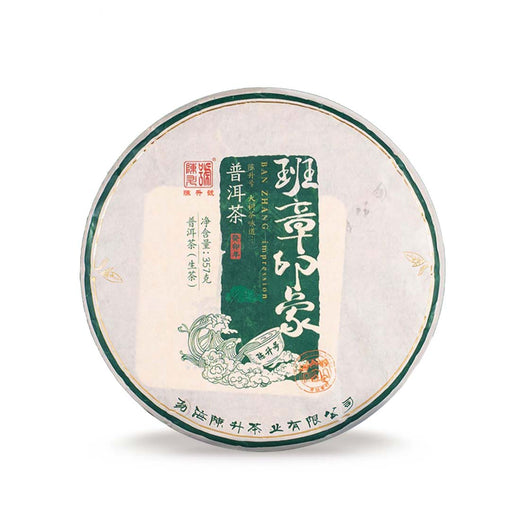
- Pick the tea. One pot, one style of tea. Young raw pu-erh suits Zhuni, a dense clay that keeps aroma bright. Ripe and aged pu-erh suit Zini and the other purple clays, which round out the liquor. Sandy Duanni softens very bitter young raw pu-erh.
- Pick the size. Up to 140 ml for one person, 150–180 ml for two or three, 200 ml and up for sharing. Our house gongfu ratio is about 5–7 g of leaf per 100–120 ml, so a bigger pot needs more leaf for every session.
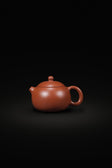
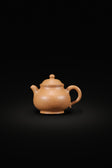
- Pick an easy shape. For a first pot, look for a wide opening (easy to load a chunk of cake and to clear the leaves), a lid that sits well, a handle that keeps your fingers away from the hot body and a spout that pours cleanly. Round Xi Shi and straight-sided De Zhong, Han Wa and Shi Piao are all good starting points. See the Yixing teapot shapes guide.
- Check how it is made. A good listing states the clay, the capacity and whether the pot is fully handmade, half-handmade or made in a mold. Read handmade, half-handmade or mold-made to see what each means.
Good first pots in our collection
| You mostly drink | A good first pot | Why |
|---|---|---|
| Young raw pu-erh | Xi Shi in Xiao Mei Yao Zhuni, 150 ml | Classic round shape, easy pour, the everyday size |
| Young raw pu-erh | De Zhong in Zhuni, 150 ml | Wide opening, very easy to load and clean |
| Ripe pu-erh | Han Wa in Zini, 200 ml | Wide mouth and a size that suits ripe pu-erh for two or three |
| Ripe or aged pu-erh | Fu Yuan in aged Zini, 150 ml | A compact purple clay pot for one or two |
| Very bitter young raw pu-erh | Gao Pan in golden Duanni, 200 ml | Open, sandy clay that softens the edges |
You can also narrow the whole collection by clay, size and tea with the filters on the Yixing teapot collection.
Mistakes to avoid
- Buying too big. A 250 ml pot for one person means a lot of leaf per session, or weak, slow pours. When in doubt, choose the smaller size.
- Using one pot for every tea. The clay slowly takes on the character of what you brew. Ripe pu-erh in particular leaves a strong trace, so keep raw and ripe in separate pots.
- Choosing by looks alone. A tiny spout or a lid that is hard to grip gets tiring over fifteen infusions. Pick a pot you will enjoy using every day.
- Treating it like other dishes. No soap, no dishwasher, no stove. Rinse with hot water only and let it dry with the lid off.
- Forgetting that Zhuni is delicate. Zhuni pots have thin walls. Set them down gently and don't knock the lid against the rim.
When your pot arrives
- Look it over. Check the body, spout and lid for chips or cracks, and that the lid sits evenly.
- Test the pour. Fill it with water and pour. The stream should be smooth and stop cleanly without dribbling down the spout.
- Test the lid. Fill it again, cover the small hole in the lid with a finger and tip the pot. With a well-fitted lid, the flow slows or stops.
- Season it. Rinse it with water just off the boil and brew two or three rounds of the tea you will keep in it. Our seasoning guide has the steps.
Each pot is shaped by hand, so small differences from the photos in color, surface and proportion are normal.
Frequently asked questions
What size should my first Yixing teapot be?
150–180 ml suits most people. It brews for one to three people with about 9–11 g of leaf. Choose up to 140 ml if you mostly drink alone.
Zhuni or Zini for a first teapot?
Choose by the tea you drink most. Zhuni for young raw pu-erh, Zini for ripe or aged pu-erh. If you drink both often, plan on two pots in time and start with the one you brew most.
Is a Yixing teapot better than a gaiwan?
Neither is better. A gaiwan suits every tea and keeps no flavor. A Yixing pot holds heat well and seasons to one style of tea, so it suits someone who already knows what they like to drink.
Can I use my Yixing teapot for oolong or black tea too?
You can, but keep each pot for one style. If a pot is seasoned with young raw pu-erh, brew young raw pu-erh in it, and use a gaiwan or a second pot for other teas.
How do I know a Yixing teapot is well made?
The lid sits evenly and fits closely, the pot pours smoothly and stops cleanly, the handle feels balanced in the hand and the seller tells you the clay, the capacity and how it was made.
Want a quick recommendation? Start from the Yixing teapot guide.


