


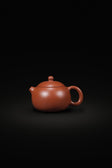
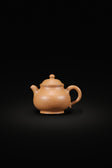
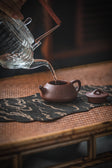




To season a new Yixing teapot, rinse it inside and out with water just off the boil, brew two or three rounds of the tea you plan to keep in it, let the last infusion stand in the pot for about ten minutes, then rinse and let it dry with the lid off. After that, the rules are simple: hot water only, no soap, and one style of tea per pot.
Before first use
A new pot can carry fine clay dust from the workshop and a slight smell of the kiln. Seasoning (开壶, kai hu) cleans it and gives the clay a first taste of the tea it will brew.
- Check and rinse. Look the pot over, check that the lid sits well and that water flows freely from the spout. Rinse inside and out under warm running water, and wipe away any loose clay with a soft cloth.
- Rinse with hot water. Fill the pot with water just off the boil and pour more over the outside. Wait a minute or two, then empty it. Repeat two or three times.
- Brew the tea you will keep in it. Brew a session of that tea as you normally would. Let the last infusion stand in the pot for about ten minutes, then pour it over the outside of the pot. Do this two or three times, using the same leaves.
- Rinse and dry. Empty the leaves, rinse with hot water and let the pot air-dry fully with the lid off before you put it away.
Some tea drinkers simmer a new pot in a saucepan with tea leaves. It works, but it adds the risk of chipping or cracking, especially for thin-walled Zhuni pots, and in our view it is not needed. The steps above are enough.
Every time you brew
- Warm the pot first with water just off the boil, then pour that water out.
- Brew with water just off the boil (100°C / 212°F) for raw and ripe pu-erh alike. Our house method is about 5–7 g of leaf for a 100–120 ml pot, a quick rinse, then infusions of about 5–10 seconds, adding a few seconds each time. Use more leaf for a bigger pot. See our gongfu brewing guide.
- Many people pour a little hot water or leftover tea over the outside of the pot during a session. This keeps the pot warm and, over time, helps the patina form evenly.
After brewing
- Empty the leaves soon. Don't leave wet leaves or tea standing in the pot for hours.
- Rinse with hot water only. Never use soap or detergent, and never put a Yixing pot in the dishwasher. The clay can take up the smell of soap.
- Wipe the outside with a soft cloth while the pot is still warm. Pay attention to the rim, lid, spout and base, especially on light Duanni clay.
- Dry it fully with the lid off or resting on its side, so air reaches the inside.
Patina
With regular brewing and wiping, a Yixing pot slowly turns glossier and deeper in color. This patina (包浆, bao jiang) comes only from use and time. You don't need to rub the pot with oils or tea leaves, and you don't need to rush it. A pot that is brewed in often and kept clean and dry will develop it on its own.
Storing your pot
Keep the pot in a dry, clean place away from strong smells such as cooking, incense or cleaning products, because the clay can take them up. Store it with the lid off or ajar. Don't keep it sealed in a plastic bag or a closed box while it is still damp.
If something goes wrong
- Musty smell: the pot was put away damp. Rinse it several times with water just off the boil, then let it dry with the lid off for a few days. Brew a session of its usual tea before drinking from it again.
- Stains on the outside: wipe with a soft cloth and hot water. Don't scrub with abrasive pads, which scratch the surface.
- A drip or hairline crack: stop using the pot for hot water if it leaks. Zhuni pots in particular have thin walls, so set them down gently and avoid knocking the lid against the rim.
Not sure which clay or size to choose? Read which Yixing teapot suits pu-erh and our guide to Yixing clays.
Frequently asked questions
Can I wash a Yixing teapot with soap?
No. Rinse it with hot water only. The unglazed clay can take up the smell of soap or detergent, and that smell will come through in your tea.
Do I have to season a new Yixing teapot?
It is worth doing. A few hot-water rinses and two or three rounds of the tea you plan to brew clean away workshop dust and give the clay a first taste of that tea. It takes about half an hour.
Can a Yixing teapot go on the stove or in the microwave?
No. Heat water in a kettle and pour it into the pot. Direct heat can crack the clay, and Yixing pots are not made for the microwave or the dishwasher.
How long does it take for a patina to form?
It depends on how often you brew and how carefully you wipe and dry the pot. With regular use you will usually see the surface start to change within a few months.
Can I switch my Yixing teapot to a different tea?
You can rinse and re-season it, but the clay keeps some of the character of what it brewed before. If you want to brew a very different tea, such as young raw pu-erh in a pot used for ripe pu-erh, a second pot is the better choice.
Find your pot in our Yixing teapot collection.


