


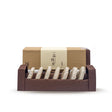
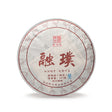
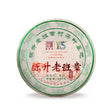
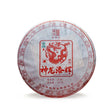




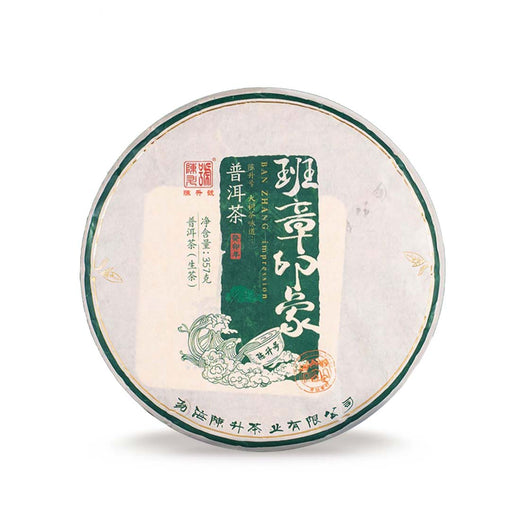


Our Nannuo base is in Banpo Laozhai, an old Hani village on Nannuo Mountain in Menghai County, Yunnan. In November 2011 we signed a 50-year agreement with the village, the longest of our base agreements. Nannuo tea is balanced, mellow and sweet, and our Banpo Laozhai base is China Green Food (绿色食品) certified.

Where Nannuo is
Nannuo Mountain is in Menghai County, Xishuangbanna, west of the Lancang (Mekong) River. It is one of Menghai's best-known tea mountains, together with Bulang Mountain, Mengsong, Bada and Hekai. The mountain is home to Hani villages. Banpo Laozhai, whose name means "old village on the slope", is one of them, known for its well-kept old-arbor tea gardens.
Nannuo is known for its very old cultivated tea trees. These trees were planted and tended by people over many generations, rather than growing wild, and they are a big part of why tea lovers know the mountain's name.

Where the name comes from
"Nannuo" is said to mean bamboo-shoot sauce in the Dai language. A local legend tells of a Dai ruler who visited the mountain and was served bamboo-shoot sauce by the Hani headman. He liked it so much that the sauce was sent to him as tribute every year, and the mountain took its name from it.
Our work in Banpo Laozhai
In November 2011 we signed a 50-year cooperation agreement with Banpo Laozhai. As at our other bases, we work on a "company + base + farmers" model: the farmers pick by hand, and we buy their fresh leaf directly. Our base in the village has its own sun-drying yard, where the leaf is made into maocha before it goes to our factory in Menghai.


For each step from fresh leaf to finished cake, see how we make our pu-erh.
What Nannuo tastes like
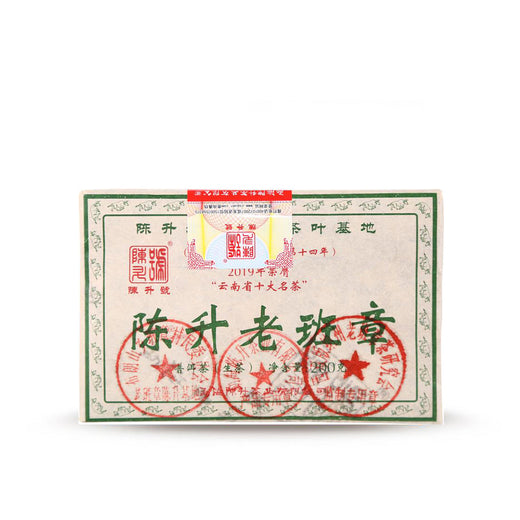
Nannuo raw pu-erh is balanced, mellow and sweet. There is some bitterness in the early infusions, but it fades quickly into huigan, a sweet aftertaste, and the liquor is smooth. Compared with the strong, bitter-then-sweet style of Lao Ban Zhang, Nannuo is gentler and easier to enjoy young. With years of aging, the liquor moves from yellow toward orange-red and the aroma becomes more aged. Our pu-erh tasting vocabulary explains the terms we use.
You can find tea from our Banpo Laozhai base in our Nannuo collection.

