





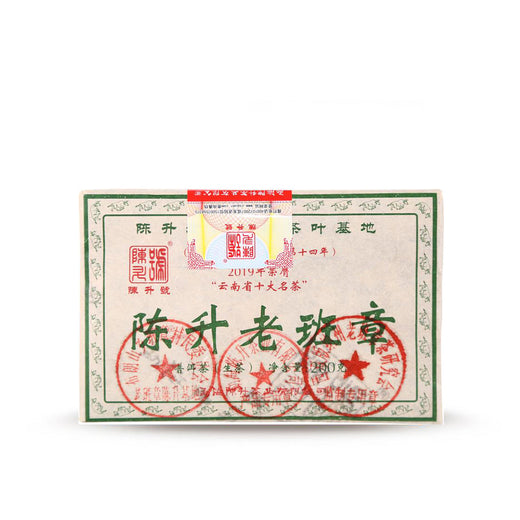


To brew pu-erh gongfu style, put about 5–7 g of tea in a 100–120 ml gaiwan or small teapot, rinse it once with water just off the boil, then make a series of short infusions: about 5–10 seconds at first, adding a few seconds each time. Good leaf gives 8–15 infusions. This guide walks through the teaware, each step, a timing table and how to adjust when a cup is too bitter or too weak.
Why brew gongfu style?
Gongfu brewing uses more leaf, less water and short steeps. Each infusion takes out only a little of what the leaf holds, so you get many small cups, and you can follow how the tea changes from the first cup to the last. It suits pu-erh well, because both raw and ripe pu-erh hold up to many infusions. It looks complicated, but once you have done it a few times it takes no more effort than a pot of tea.
If you'd rather use a mug or teapot, use about 3–4 g per 250 ml, rinse, steep the first cup for 1–2 minutes and later cups longer. You'll get 3–4 cups.
What you need
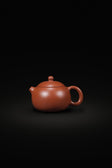
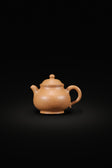
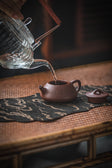
- Gaiwan or small teapot (100–120 ml). A porcelain gaiwan (lidded bowl) is the easiest place to start. It doesn't hold flavors, so you can brew any tea in it, and you can see the leaves. A purple clay teapot holds heat well and many people keep one just for pu-erh.
- Fair cup (gong dao bei). A small pitcher you pour each infusion into, so every cup gets the same strength. Glass lets you see the color of the liquor.
- Small cups (30–50 ml). White porcelain shows the color best.
- Strainer. Catches small leaf pieces from pressed tea.
- Kettle. Any kettle that brings water to a full boil.
- Pu-erh pick and a scale. A pick for breaking the cake, and a small kitchen scale for the first few sessions until you can judge 5–7 g by eye.
- Tea tray or a bowl. To catch the rinse water and spills.
You don't need everything on day one. A gaiwan, a cup and a kettle are enough to start. See our teaware if you want to build a set.
Choosing a tea
Any pu-erh works with this method. Raw pu-erh is brighter, with some bitterness that turns into huigan (sweet aftertaste). Ripe pu-erh is mellow and smooth, with an aged or woody aroma. If you are new to both, a small sample of each is the easiest way to find out which you prefer. Our guide to raw vs ripe pu-erh explains the difference.
Step by step
1. Boil the water
Bring fresh, filtered or good tap water to a full boil. Use it just off the boil (100°C / 212°F) for every infusion, raw and ripe alike. Keep the kettle on or reboil between infusions so the water stays hot.
2. Warm the teaware
Pour hot water into the gaiwan, fair cup and cups, then pour it out. Warm teaware keeps the brewing temperature steady and rinses away any dust.
3. Break and weigh the tea
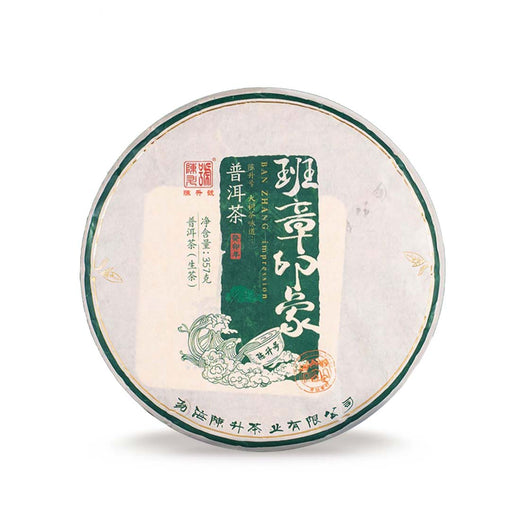
Use a pick to lift about 5–7 g from the edge of the cake. Work along the layers so the leaves come away in flakes, not powder, and always push the pick away from the hand holding the cake. For a 100 ml gaiwan, start with 5 g; for 120 ml, use 6–7 g. Our guide to breaking and rinsing a pu-erh cake shows the technique.
4. Rinse once
Put the leaves in the warm gaiwan, fill it with boiling water, and pour the water off after 5–10 seconds. Discard this rinse. It wakes up the pressed leaves so the first real infusion is even. One quick rinse is enough for most teas. A very tightly pressed cake or a dragon pearl can take a second quick rinse.
5. Brew the first infusions
Fill the gaiwan with boiling water, put the lid on, and pour the whole infusion into the fair cup through the strainer after about 5–10 seconds. Pour out every drop each time. Leaves left sitting in water keep brewing and make the next cup bitter. Then pour from the fair cup into the drinking cups.
6. Add a few seconds each time
Keep the first three infusions short, then add a few seconds each time as the leaves give up less flavor. Use the table below as a starting point.
| Infusion | Steep time |
|---|---|
| Rinse | 5–10 seconds, pour off |
| 1–3 | 5–10 seconds |
| 4–6 | 10–20 seconds |
| 7–9 | 20–40 seconds |
| 10 and later | 1 minute, then longer each time |
Good leaf gives 8–15 infusions. Ripe pu-erh tends to sit at the lower end and young or aged raw at the higher end. For a fuller breakdown, see how many times you can steep pu-erh.
7. Pour and serve
Fill each cup about two-thirds to three-quarters full. If you're serving others, pour from the fair cup so everyone gets the same tea. Between infusions, leave the gaiwan lid slightly open so the hot leaves aren't steaming under a closed lid.
Adjusting the brew
| If the tea is… | Try this next time |
|---|---|
| Too bitter or harsh | Shorten the steep, or use less leaf. Keep the water just off the boil. |
| Too weak or thin | Steep a few seconds longer, or use a little more leaf. |
| Strong early, then fades fast | Keep the first infusions shorter and add time more slowly. |
| Cloudy, with lots of small pieces | Break the cake more gently along the layers and use the strainer. |
Don't lower the water temperature to fix bitterness. Shorter steeps and less leaf give a smoother cup without losing aroma. If you run into other problems, our list of common brewing mistakes covers the usual causes.
Reading the cup
Slow down for a moment with each infusion. Three things are worth noticing.
Color
Hold the cup against something white. Young raw pu-erh gives a yellow to pale yellow liquor. As raw pu-erh ages, the liquor moves toward orange-yellow and then orange-red. Ripe pu-erh gives a red to deep red liquor, sometimes described as wine red. Good liquor is clear and bright, not cloudy.
Aroma
Smell the liquor, then the inside of the gaiwan lid, then the empty cup. Bring your nose close to each. Young raw tea often has a floral-honey aroma or high aroma. Aged raw tea develops an aged aroma. Ripe tea is mellow, with an aged or woody aroma, and some ripe teas have a sticky-rice aroma.
Taste and feel
Take small sips and let the tea sit in your mouth for a moment. Ask yourself:
- Is it smooth, thick or mellow? Strong, or strong and thick?
- Does bitterness turn quickly into huigan (sweet aftertaste)?
- Do you notice salivation, a moist feeling in the mouth after swallowing?
- Is there a pleasant throat feel (hou yun) that lingers?
- Do you feel cha qi, the warm, alert feeling many drinkers notice during a session?
Our tasting vocabulary explains each of these terms, and our tasting standard page shows how we use them on our product pages.
Caring for your teaware
- Empty the leaves and rinse everything with hot water after each session. Don't use soap on clay teapots, which absorb flavors.
- Let everything dry completely with the lids off before putting it away.
- For tea stains on porcelain or glass, a little baking soda works well. Don't use harsh cleaners or scouring pads on clay.
FAQ
What water temperature should I use?
Water just off the boil, 100°C (212°F), for every infusion, raw and ripe. Boiling water opens pressed leaves and brings out the aroma. If a tea tastes too bitter, shorten the steep or use less leaf.
Can I re-steep the leaves later in the day?
Yes. Pour off all the liquor, put the lid back on, and continue within the same day. Make the next steep a little longer. Don't keep wet leaves overnight.
Does pu-erh contain caffeine?
Yes. Like all tea made from the tea plant, pu-erh contains caffeine, and a long gongfu session adds up. If you're sensitive to caffeine, drink smaller cups, stop earlier in the day, or read our guide to pu-erh and caffeine.
Where should I keep the rest of the cake?
Wrapped, in a box, somewhere dark and odor-free. See how to store pu-erh tea.
Ready for your first session? Our Raw Pu-erh Tasting Flight is an easy place to start.
This article is general information about tea, not medical advice. If you're pregnant, breastfeeding, taking medication or managing a health condition, please talk to your doctor before changing what you drink.


