




Buy your weekday smoothies and get your weekend ones for free. (7 for the price of 5!)
WELLNESSWEEK
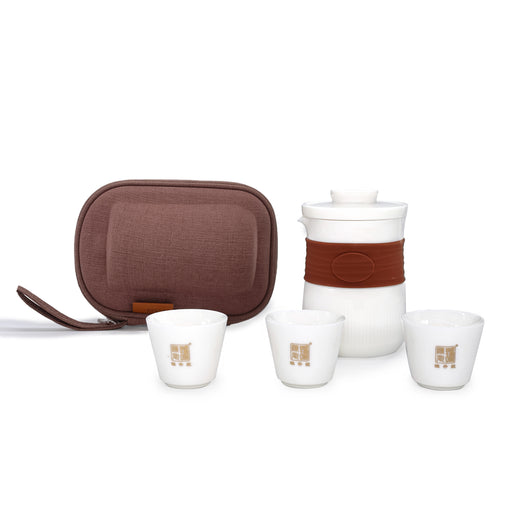
Taste a few styles before you commit to a full cake.
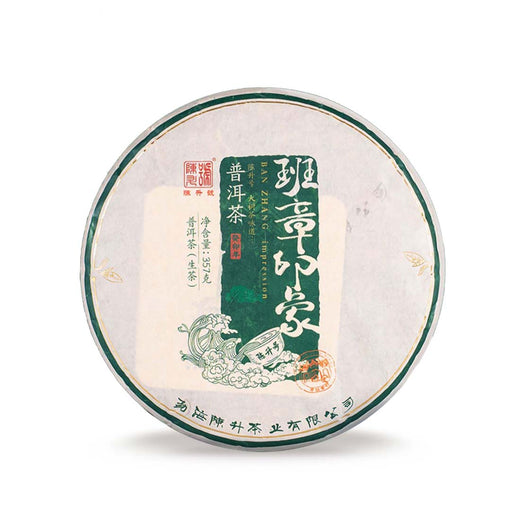
Reliable cakes to brew at home, morning to evening.
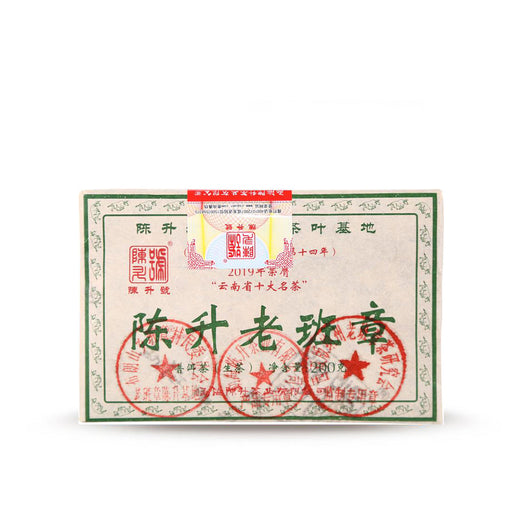
Old-arbor single-origin cakes and aged pu-erh to drink or keep.
The house blends and annual releases Chen Sheng Hao is known for.


陈升号 · Newsletter
Join our newsletter and we'll send you four short letters, a few days apart:
After that, you'll be the first to hear about new teas and limited releases.
陈升号 · Newsletter
Your first letter, the story behind our tea, is on its way. If it isn't in your inbox in a few minutes, please check your Promotions or Spam folder.

Authentic pu-erh is made in Yunnan from large-leaf tea, and an honest cake tells you who made it, when, and whether it is raw or ripe. To check what you are buying, read the packaging (wrapper, nei fei, nei piao, batch details), brew the tea and judge it with your senses, and compare the price with what the claimed origin really costs. Most fakes are not "fake tea" at all. They are real tea sold under a more famous name, a false age or a false origin. This guide shows how to spot them.
For background, start with Pu-erh Tea 101 and the main origins of pu-erh.
The most common deception is a famous name on ordinary leaf. Pu-erh is often sold by village or mountain, and a few names carry high prices:
Each of these villages has a limited area of old-arbor gardens, and old-arbor trees yield little leaf, picked by hand, mostly in spring. Demand for the names is far larger than the harvest. So the reality check is simple: if a cake with "Lao Ban Zhang" or "Bingdao" printed large on the wrapper costs about the same as an everyday cake, it is almost certainly not leaf from that village. Leaf from nearby gardens, terrace bushes or a blend can be good tea, but you should pay for what it is.
Watch the wording too. "Lao Ban Zhang style", "Ban Zhang area" or "Bulang region" can be honest descriptions, or can be used to suggest more than the tea delivers. Ask the seller exactly where the leaf was picked.
Wrapper paper yellows somewhat with age, but light and handling yellow it too, and wrappers can be replaced. The wrapper is evidence, not proof.
The nei fei (内飞) is a small ticket placed on the leaf before pressing, so it sits embedded in the surface of the cake. It usually carries the producer's name or mark. Because it is pressed in with the leaf, it is hard to swap later. A ticket that looks glued on top, or a cake with none where the producer normally uses one, deserves a closer look.
The nei piao (内票) is the inner description ticket, a loose slip tucked between the wrapper and the cake. It often describes the producer and the tea. It is easy to lose or replace, so read it together with the wrapper and nei fei.
Cakes traditionally come in a bamboo-wrapped tong of seven, and tongs are packed in baskets or boxes. Labels on the outer packaging often repeat the production date and batch number. The dates on every layer should agree. A genuine producer can usually confirm a batch number if you send a photo of the packaging.
For more on reading dates, see how to tell the production year of a pu-erh cake.
The packaging tells you what the tea claims to be. The cup tells you whether it behaves like it. Use the five factors of the T/PCX 008—2026 tasting method: dry leaf, liquor color, aroma, taste and infused leaf. Brew with water just off the boil (100°C / 212°F), about 5–7 g in a 100–120 ml gaiwan, a quick rinse, then short infusions of 5–10 seconds.
Our tasting standard explains each factor in detail, and our guide to good vs. poor pu-erh lists the signs to look for.
Every step between the tea garden and your cup is a chance for leaf to be mixed, renamed or re-dated. Buying from the producer, or from a seller who buys directly from one, removes most of that risk. Before you buy an expensive cake, ask:
A seller who can't answer these questions can't vouch for the tea.
Chen Sheng Hao was founded in Menghai in 2007 by Shenghe Chen. We work under long-term agreements with the villages our teas are named after: a 30-year agreement with Lao Ban Zhang signed in 2008, with a first-processing workshop in the village; a 50-year agreement with Banpo Laozhai in Nannuo from 2011; and a 30-year agreement with Na Ka covering 2013–2042. Our factory uses no-ground-contact processing, our tea rests in climate-controlled warehouses, and our teas are China Green Food certified. Ask us where and when any of our teas was made. We make old-arbor tea, and we take the time to make it right.
To taste for yourself, start with our tea samples, or explore our single-origin teas.
This article is general information about tea, not medical advice. If you're pregnant, breastfeeding, taking medication or managing a health condition, please talk to your doctor before changing what you drink.

Jinggu Dabai, a large-leaf white tea from Pu'er City in Yunnan, now holds a national geographical indication certification trademark in China. Here is what the approval covers and why origin names matter to tea buyers.

Brew our pu-erh, share what you really think, and see your review on our product pages. Our new Tea Creator Program sends free tea samples to creators with 1,000+ followers, features the best reviews on cspuerh.com and gives you a personal discount code.

A 5 kg lot of pu'er-style raw tea from Golaghat, Assam sold for Rs 12,000 per kg at the Guwahati Tea Auction Centre on September 26. Here is what was sold, and what China's national standard says pu'er is.

At the first Ripe Tea Conference in Guangzhou on September 21, 2026, Chen Sheng Hao set out its view of premium ripe pu'er and showed three new ripe teas, including ripe versions of Chen Sheng No. 1 and Ba Wang Qing Bing.

We rebuilt cspuerh.com around how you shop for pu-erh: filter by type, year, origin and size; see the key facts next to Add to cart; and buy more easily on your phone. Here is what changed and what stayed the same.
