




Buy your weekday smoothies and get your weekend ones for free. (7 for the price of 5!)
WELLNESSWEEK
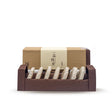
Taste a few styles before you commit to a full cake.
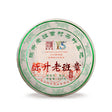
Reliable cakes to brew at home, morning to evening.
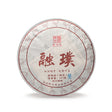
Old-arbor single-origin cakes and aged pu-erh to drink or keep.
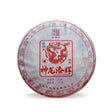
The house blends and annual releases Chen Sheng Hao is known for.


陈升号 · Newsletter
Join our newsletter and we'll send you four short letters, a few days apart:
After that, you'll be the first to hear about new teas and limited releases.
陈升号 · Newsletter
Your first letter, the story behind our tea, is on its way. If it isn't in your inbox in a few minutes, please check your Promotions or Spam folder.

To brew pu-erh in a gaiwan, use about 5–7 g of tea in a 100–120 ml gaiwan, rinse it once with water just off the boil, then pour short infusions of about 5–10 seconds, adding a few seconds each time. The same method works for raw and ripe pu-erh, from a cake, a brick or loose leaf. The ten photos below walk you through one session.
Brewing in a gaiwan (gongfu style) lets you taste the tea change from one infusion to the next: the aroma comes first, the fullest cups come in the middle, and the later cups turn lighter and sweeter.
Still choosing a tea to brew? Find your step on our pu-erh ladder.
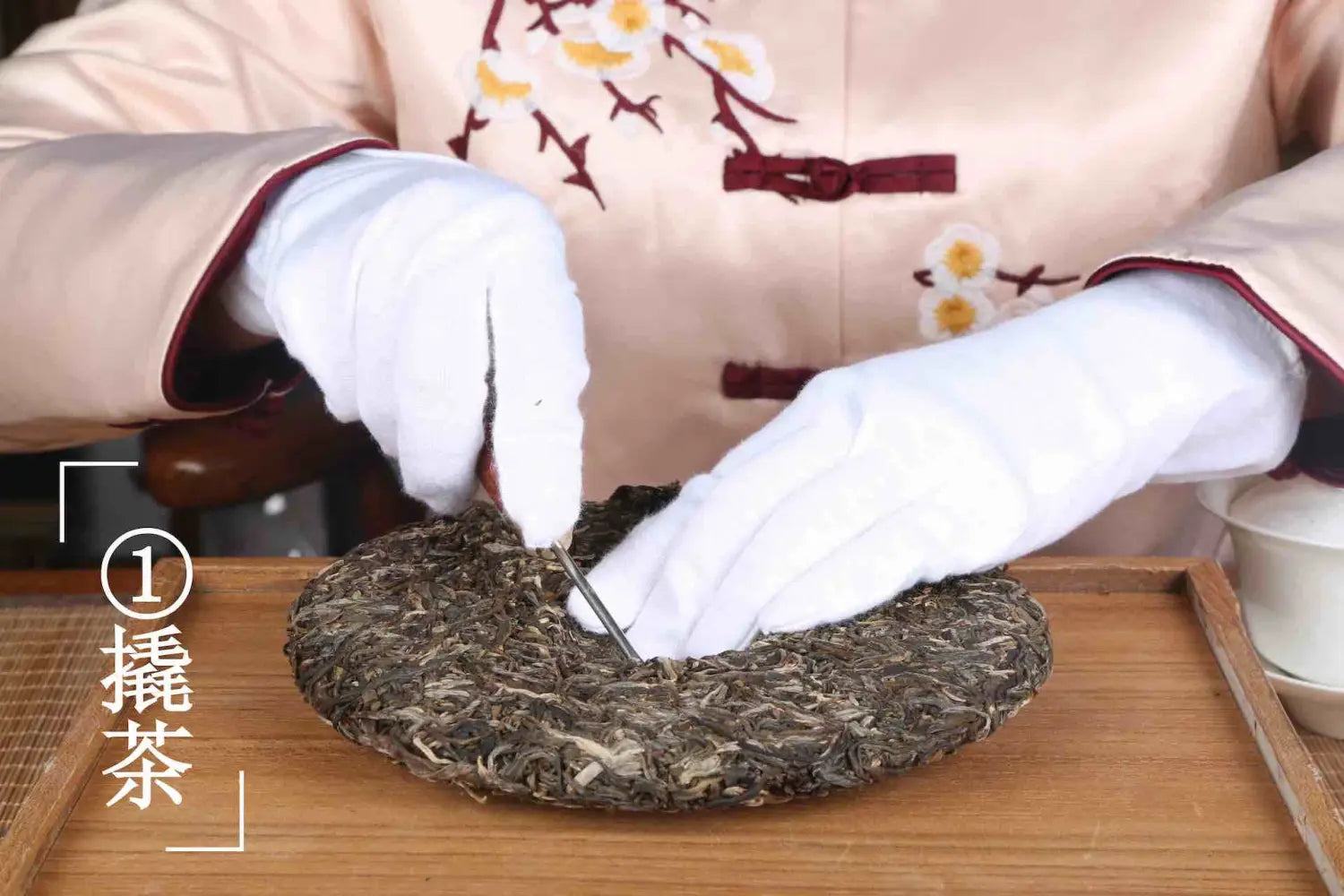
Lay the cake on a tray, smooth side down, and hold it steady with one hand. Slide the knife into a gap between the leaves near the edge, gently lever it up and down, and repeat in a nearby gap until a piece comes loose. Working along the gaps keeps the leaves whole instead of crushing them.
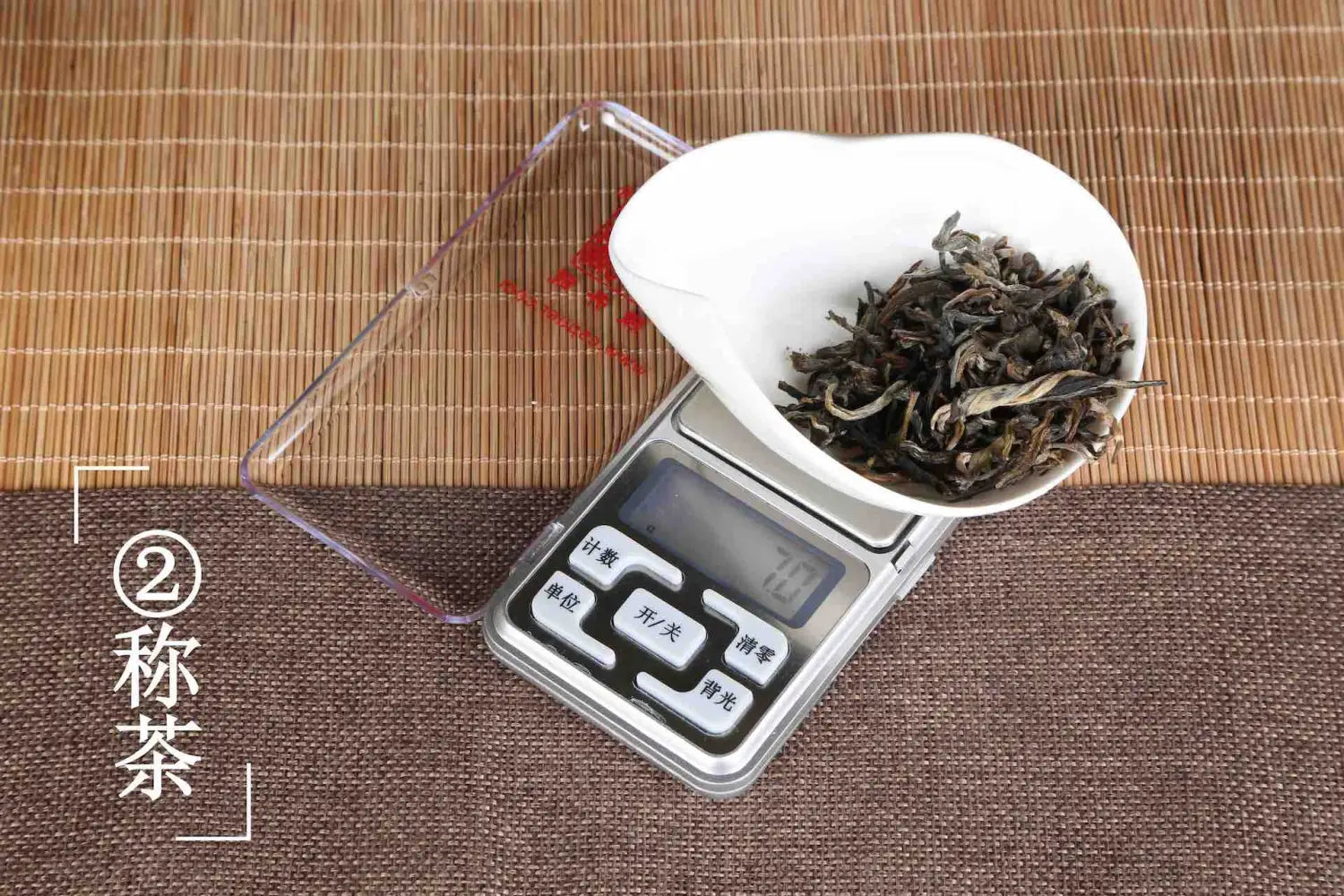
Weigh about 5–7 g of tea for a 100–120 ml gaiwan. Break the piece into smaller chunks by hand so the water can reach all the leaves.
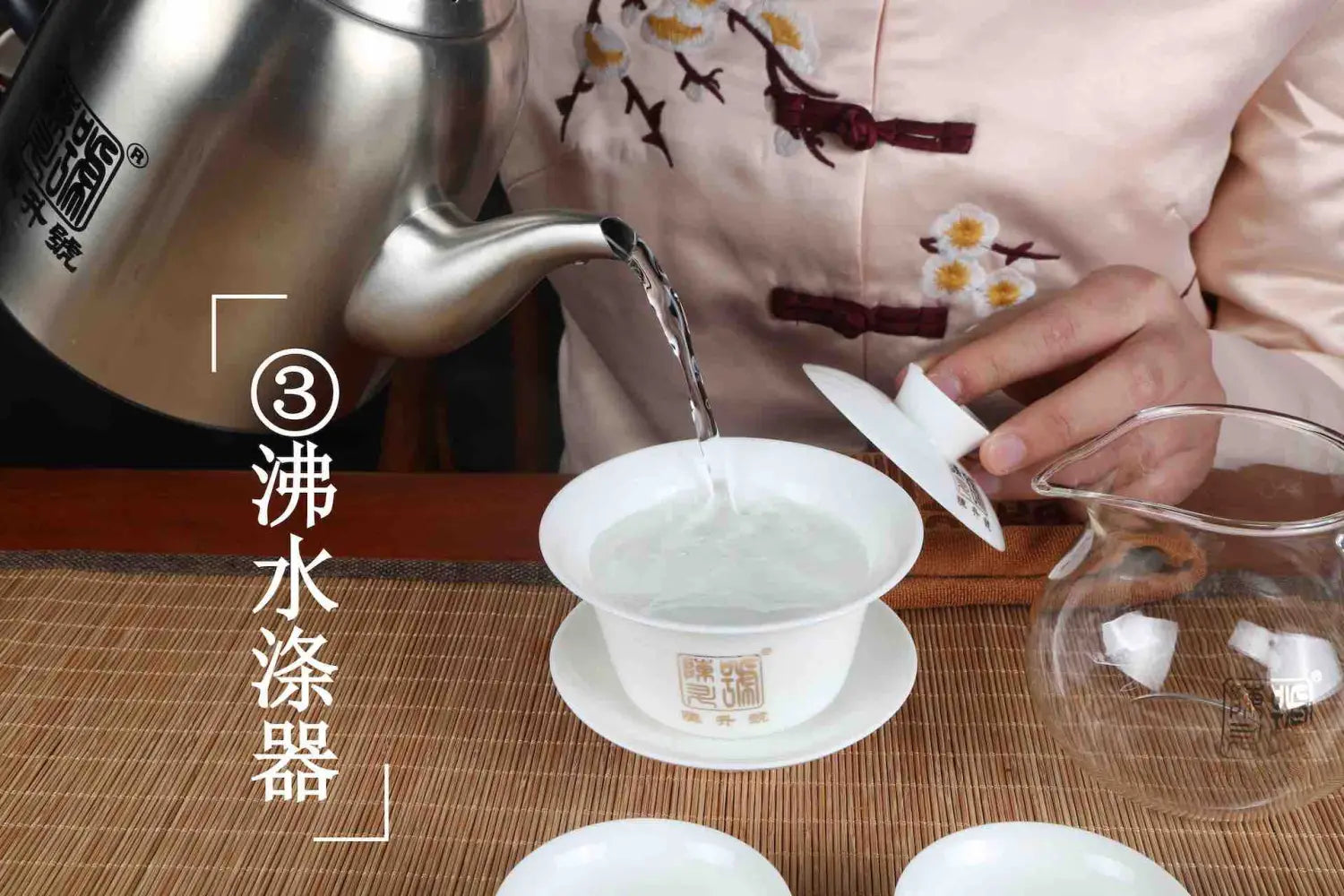
Pour water just off the boil (100°C / 212°F) into the empty gaiwan, and over the pitcher and cups if you are using them. Discard the water. A warm vessel keeps the brewing temperature steady.
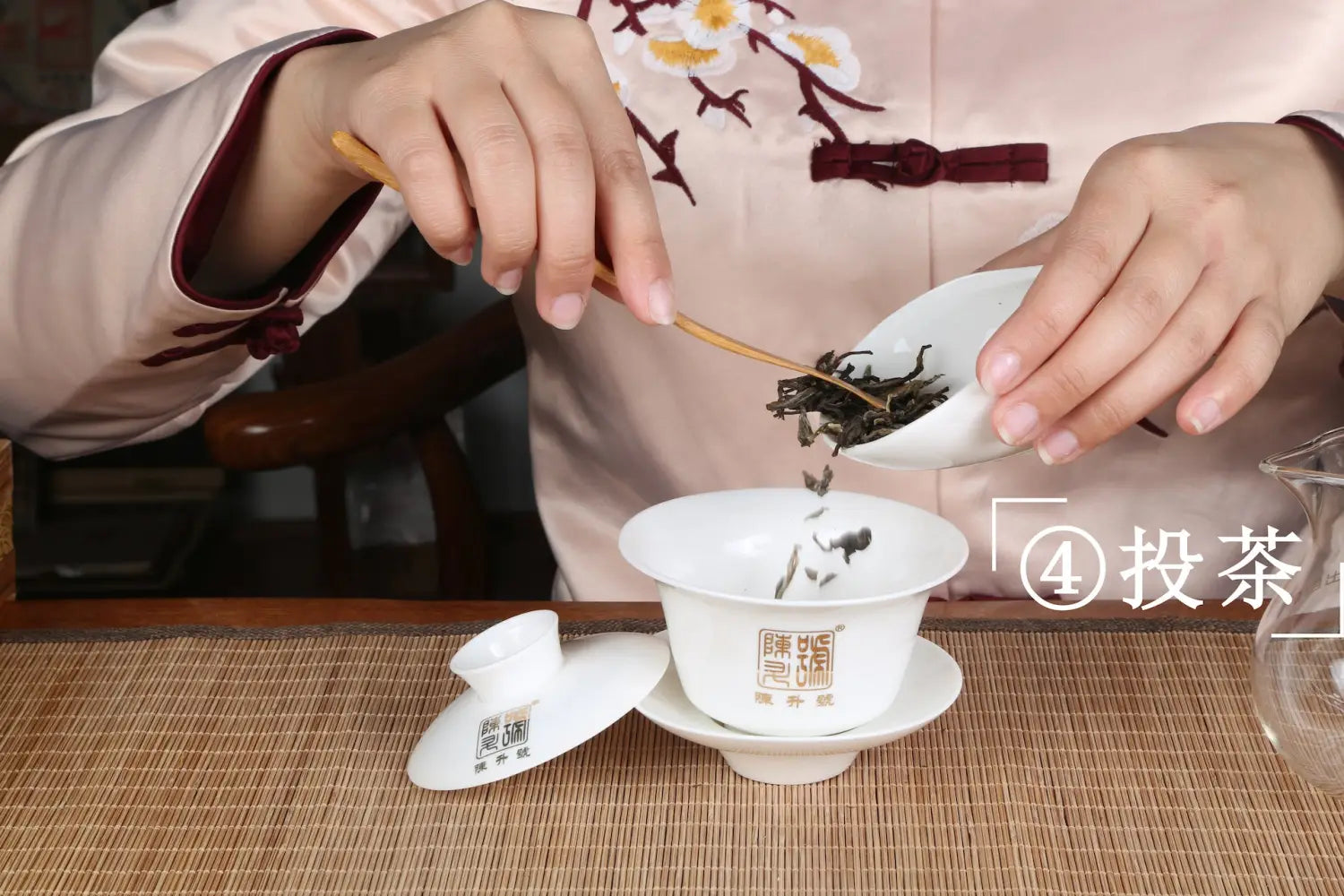
Tip the weighed leaves into the warm gaiwan. Use a tea pick to guide them in so none fall on the tray.
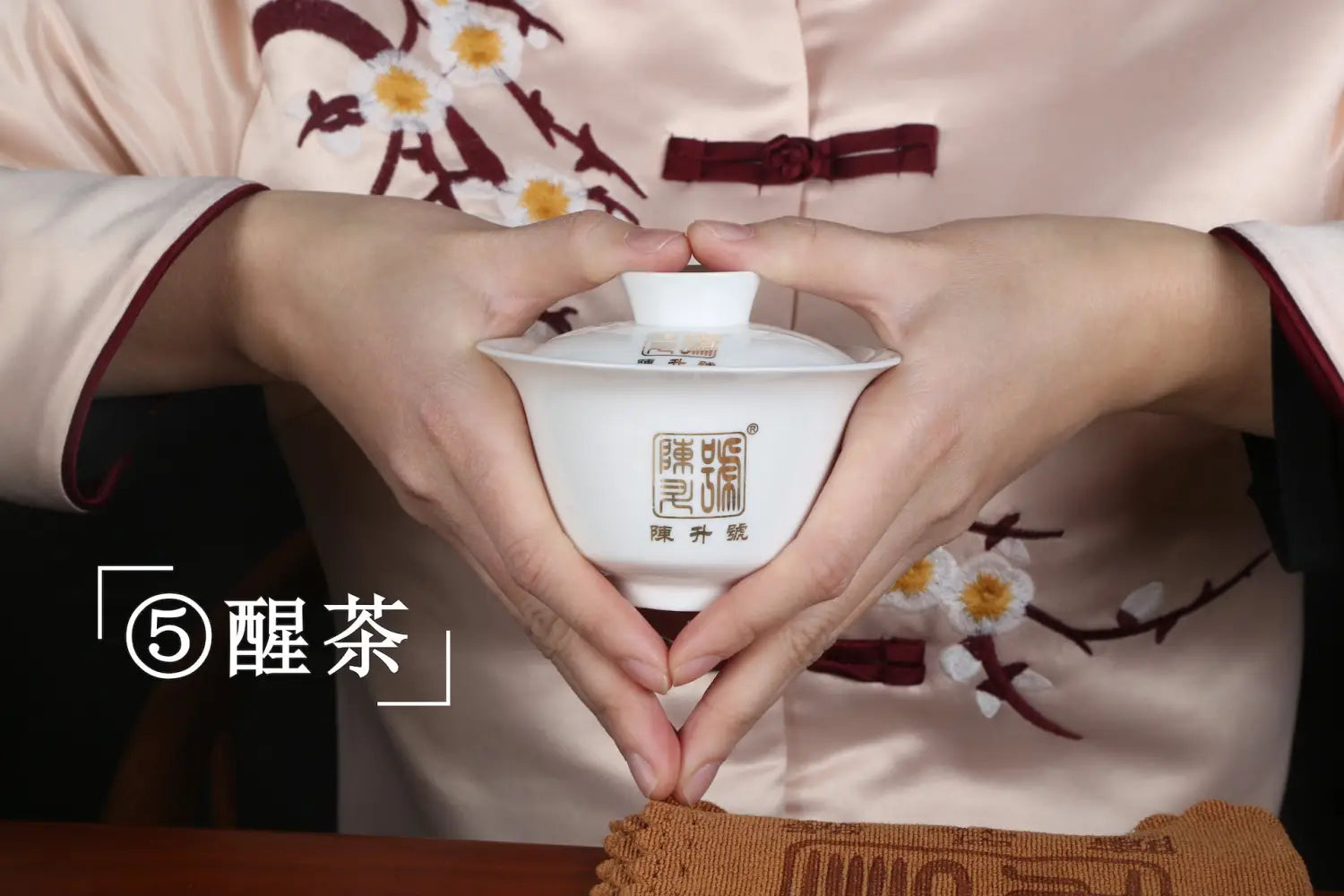
Put the lid on and gently shake the gaiwan up and down about five times. The heat of the warm gaiwan brings out the aroma of the dry leaf. Lift the lid and smell it.
Fill the gaiwan with water just off the boil, wait 5–10 seconds, then pour the water away. This quick rinse washes off small leaf particles and helps tightly pressed leaves start to open.
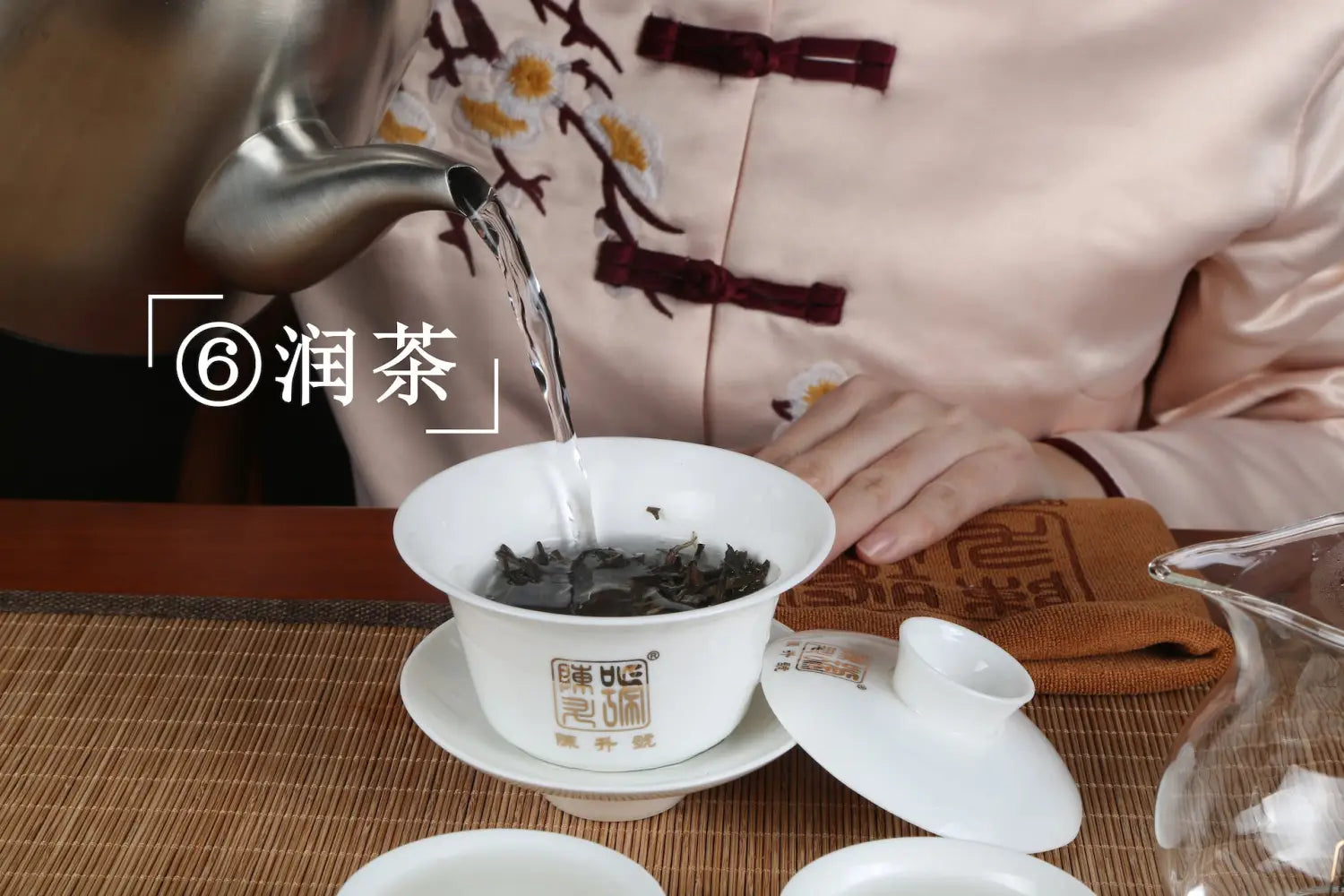
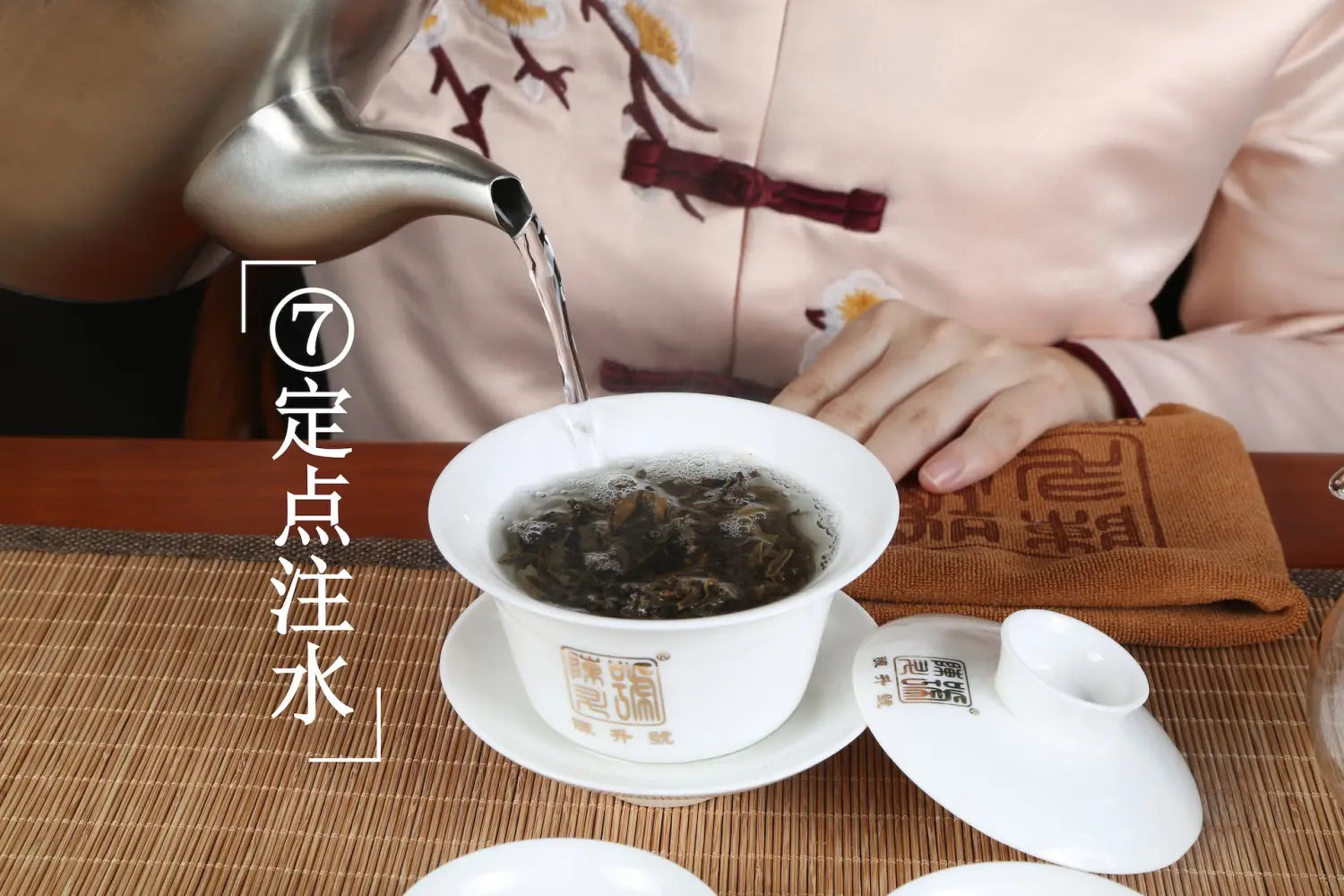
Refill the gaiwan with water just off the boil, pouring around the inside edge so the water does not hit the leaves directly. Cover and steep for about 5–10 seconds.
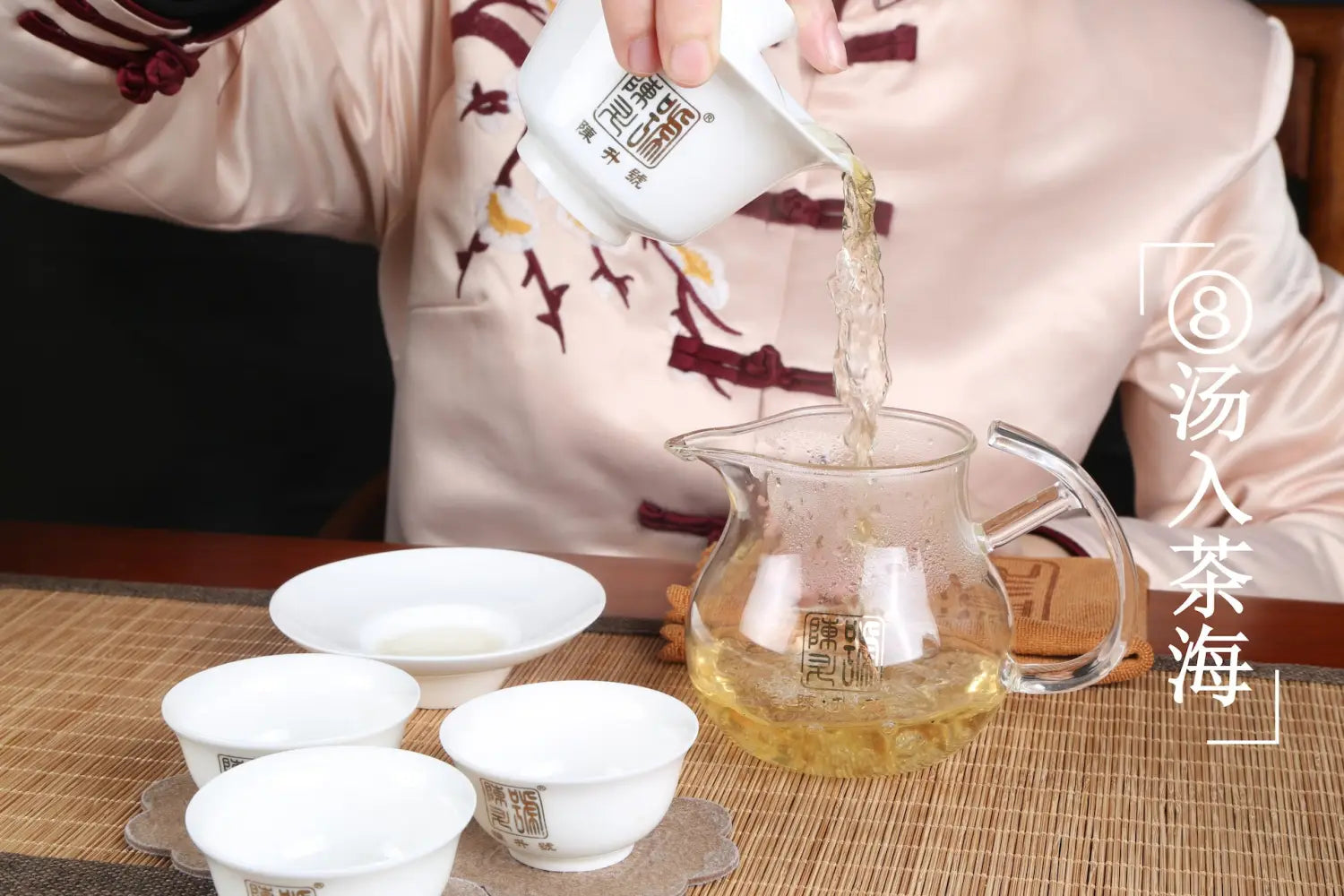
Hold the lid slightly open and pour all the liquor into the tea pitcher. Pour out every drop, so the leaves don't keep steeping. Using a pitcher means every cup tastes the same.
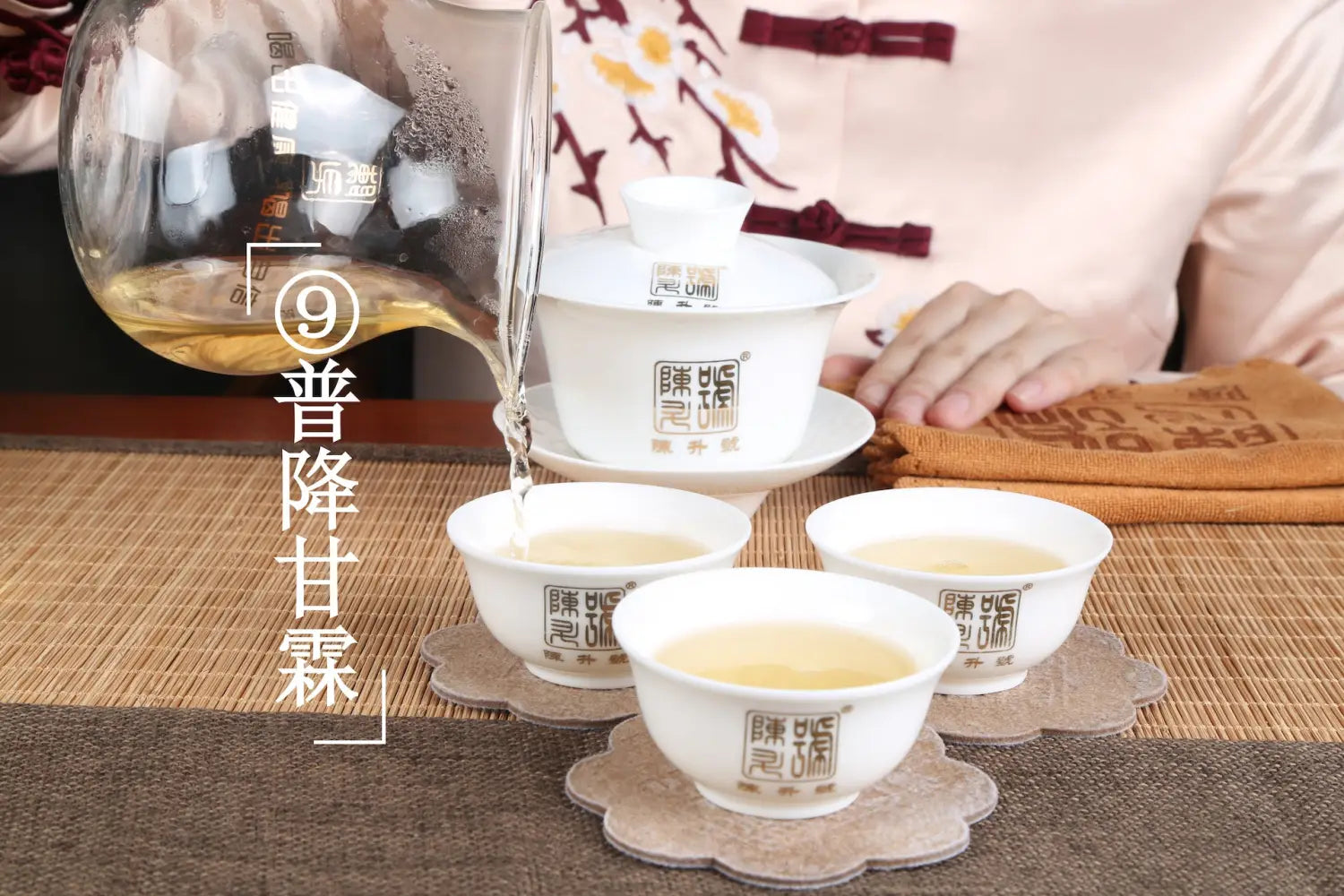
Pour from the pitcher into the small cups. Fill each cup about two-thirds full.
Look at the liquor color, smell the aroma and take a small sip. Then repeat steps 7–9 for the next infusion, adding a few seconds of steeping time each round.
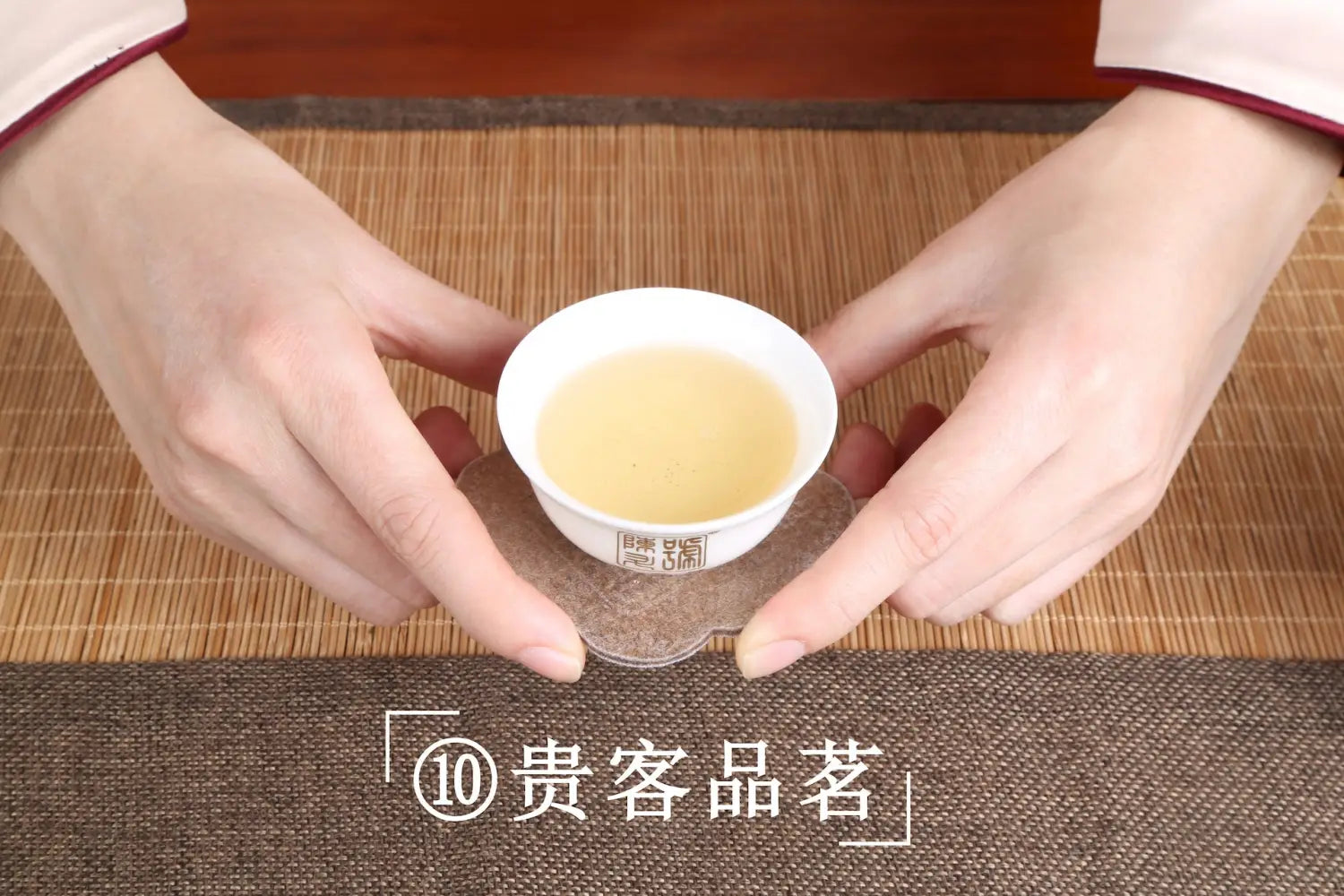
Good leaf gives 8–15 infusions. Start at about 5–10 seconds and add a few seconds for each new infusion. Watch the leaves open and the liquor change, and notice how the taste shifts from one cup to the next. When the tea no longer tastes of much, the leaves are spent.
If a cup tastes too bitter, shorten the next steep or use a little less leaf next time. Keep the water just off the boil; don't use cooler water.
You can brew good pu-erh in a mug or a Western teapot:
Need a gaiwan or pitcher? Browse our teaware.

Every tea page at cspuerh.com now has tasting reviews. Score a tea on the five factors from the Pu'er Tea Association's 2026 standard, get a weighted score out of 100, and describe it with 95 defined tasting words. Simple mode takes about three minutes.

The 95 tasting terms in the Pu'er Tea Association's 2026 quality standard, in English and Chinese — aroma, liquor color and taste, plus how the standard scores a pu'er.

What really drives pu-erh prices, from mountain fame and old-arbor leaf to processing and years of storage, and how to find good value without overpaying.

Shop our premium Pu Erh tea collection—available in both ripe and raw varieties! Pu-erh tea, a beloved fermented variety from...

Shop our Pu Erh tea collection, available in both ripe and raw varieties! Pu erh tea, with its rich history...

Shop our premium Pu Erh tea collection—available in both ripe and raw varieties! In the misty mountains of Yunnan Province,...