







Yixing teapot clays fall into three main families. Zhuni (朱泥, vermilion clay) is dense and keeps aroma clean and bright, which suits young raw pu-erh. Zini (紫泥, purple clay) is more open and holds steady heat, which suits ripe and aged pu-erh. Duanni (段泥, duan clay) is sandy and breathable, and suits raw pu-erh, white tea and roasted oolong. This guide explains each one and the named clays you will see on our listings.
What makes Yixing clay different
Yixing clay is an iron-bearing stoneware clay from the hills around Yixing in Jiangsu province. It contains fine quartz, mica and kaolinite. Teapots made from it are fired without glaze, and the fired clay keeps very fine pores. In use, the pot holds heat, takes up a little of the tea's oils and slowly builds a patina. Yixing teapots have been made since the 16th century, when the potter Gong Chun helped make them popular with scholars and tea drinkers.
Clay names are a starting point, not a guarantee of taste. The same clay can look different depending on how it was prepared and fired, and the shape, wall thickness and size of a pot change how it brews as much as the clay does.
Zhuni (vermilion clay)
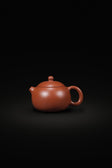
Zhuni is high in iron and very fine-grained. It shrinks a great deal in the kiln, which makes it hard to shape by hand without warping or cracking. For that reason most Zhuni pots are small, with thin walls and a smooth, glossy surface. Fired Zhuni ranges from bright orange to deep red and turns a deeper red when you pour hot water over it.
In the cup, Zhuni keeps aroma clean and bright and pours fast, which suits short infusions of young raw pu-erh, high-aroma oolongs and black tea. Thin walls also mean a Zhuni pot is more fragile, so handle it with care.
On our listings you will see two Zhuni clays:
- Original Ore Zhuni (原矿朱泥): Zhuni prepared from natural ore.
- Xiao Mei Yao Zhuni (小煤窑朱泥): a Zhuni named after the small coal-mine area of Yixing where it was dug, prized for its fine texture.
Zini and the purple clays
Zini is the classic purple clay that gave zisha (紫砂, purple sand) its name. It fires to a purplish brown and has a more open structure than Zhuni. Zini pots usually have slightly thicker walls and hold steady heat through a session, which rounds out the liquor and brings forward smoothness and sweetness. This suits ripe pu-erh, aged raw pu-erh, roasted oolong and black tea.
Our purple clays include:
- Zini (紫泥): the everyday purple clay, a dependable choice for many teas.
- Tianqing Ni (天青泥): a rare purple clay that is grey-blue when raw and fires to a dark liver red. It develops a soft, jade-like sheen with use.
- Jiangpo Ni (降坡泥): a sandier clay with a reddish-orange color and natural yellow specks.
- Lao Zini (老紫泥, aged Zini): Zini ore that has been weathered and aged before use.
Shop Zini and purple clay teapots
Duanni (duan clay)
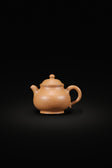
Duanni fires to pale yellow, golden or bluish-grey tones and has a slightly sandy texture, sometimes with small mineral specks. It is breathable and lets a little heat ease off between pours, which keeps the liquor clean and lively. This suits raw pu-erh, white tea and roasted oolong.
Because Duanni is light in color, tea stains show sooner. Empty the pot and rinse it with hot water after each session, and wipe the rim and spout. On our listings you will see Huangjin Duanni (黄金段泥, golden duan clay) and Qinghui Duanni (青灰段泥, bluish-grey duan clay).
The three clays side by side
| Clay | Fired color | Texture | In the pot | Best for |
|---|---|---|---|---|
| Zhuni | Orange to deep red | Fine, smooth, glossy | Dense, pours fast, keeps aroma bright | Young raw pu-erh, high-aroma oolong, black tea |
| Zini and purple clays | Purplish brown to dark liver red | Fine to slightly sandy | More open, steady heat, rounds out the liquor | Ripe pu-erh, aged raw pu-erh, roasted oolong |
| Duanni | Pale yellow, golden or bluish grey | Sandy, sometimes speckled | Breathable, keeps the liquor clean and lively | Raw pu-erh, white tea, roasted oolong |
Why good Yixing clay is scarce
Huanglong Mountain (Yellow Dragon Mountain) near Yixing is the best-known source of zisha clay. Excavation there has been prohibited for years, so most potters work from clay that was mined and stored earlier. That is one reason pots made from well-known clays cost more, and why it is worth buying from a seller who names the clay on each pot.
To choose a pot for the tea you drink, read which Yixing teapot suits pu-erh. To get a new pot ready, see how to season a Yixing teapot.
Frequently asked questions
Which Yixing clay is best for a first teapot?
Choose the clay for the tea you drink most. If that is young raw pu-erh, start with Zhuni. If it is ripe pu-erh or older raw pu-erh, start with Zini. Either way, a 150–180 ml pot is the easiest size to begin with.
Why are Zhuni teapots usually small?
Zhuni shrinks a great deal in the kiln, so large pots are hard to shape and fire without warping or cracking. Most Zhuni pots are therefore small, thin-walled gongfu pots.
Does a Yixing teapot change color with use?
Yes. With regular brewing and wiping, the surface becomes glossier and the color deepens. This patina builds slowly over months of use and is a sign of a well-used pot.
Is a Duanni teapot harder to keep clean?
Its light color shows tea stains sooner than darker clays. Empty and rinse the pot with hot water after every session and wipe the rim and spout, and stains stay light.
What is Tianqing Ni?
Tianqing Ni is a rare purple clay that is grey-blue before firing and dark liver red afterwards. It is valued for its fine feel and the soft, jade-like sheen it develops with use, and it suits ripe and aged pu-erh.
Browse every clay in our Yixing teapot collection.


