







Step 01: Picking采茶
One bud and two leaves, picked by hand from old-arbor trees in the gardens of our partner villages.
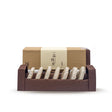
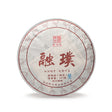
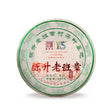
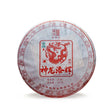
Taste a few styles before you commit to a full cake.
Reliable cakes to brew at home, morning to evening.
Old-arbor single-origin cakes and aged pu-erh to drink or keep.
The house blends and annual releases Chen Sheng Hao is known for.
Fully handmade pots in Zhuni, Zini and Duanni clays.
Choose by how many cups you pour and which pu-erh you brew.
Glass and travel sets for the office or the road.
Short guides to clay, shape and size, and a 3-question teapot finder.


陈升号 · Newsletter
Join our newsletter and we'll send you four short letters, a few days apart:
After that, you'll be the first to hear about new teas and limited releases.
陈升号 · Newsletter
Your first letter, the story behind our tea, is on its way. If it isn't in your inbox in a few minutes, please check your Promotions or Spam folder.

从茶园到茶饼How our pu-erh is made
Fifteen steps between the tea tree and your shelf — and through all fifteen, one rule holds: the tea never touches the ground.
15 steps · 2 places · 1 rule
Never touches the ground · 不落地
Leaves are picked into baskets, withered in troughs, fired, rolled and dried on raised racks, sorted on clean tables and wrapped by hand. It is our basic standard of hygiene and care — follow it step by step below.
The first five steps happen at our primary-processing bases on the tea mountains, close to the gardens, while the leaves are fresh.
One bud and two leaves, picked by hand from old-arbor trees in the gardens of our partner villages.

Fresh leaves rest in withering troughs, softening as moisture evens out and the first aromas form.

The leaves are wok-fired by hand. Heat, timing and touch decide when each batch is done — this is where much of a tea’s character is set.

Fired leaves are rolled by hand into tight, even strips, ready for drying.

The rolled leaves dry under the Yunnan sun on raised racks, becoming maocha — the raw material of pu-erh.
The maocha then travels to our factory in Menghai, where it is tested, tasted, cleaned, pressed and packed.

Every lot of maocha is tested in our in-house laboratory before it is allowed to move on.

Our tasters assess each lot — appearance, liquor, aroma, taste and spent leaf — before any blending or pressing.

Electrostatic separation and wind sifting remove dust and stray matter from the leaves.

A final pass by hand picks out anything the machines missed.

Steamed leaves are pressed into cakes. Machine pressing gives even, consistent cakes for everyday lines.

For our classic cakes we still use the traditional stone press — slower, and prized by collectors for how the cakes age.

Pressed cakes rest in the drying room until their moisture meets our standard.

Each cake is wrapped in cotton paper by hand, using the brand’s traditional 18-fold wrap.

Seven cakes are bound into a tong with natural bamboo sheath — breathable packaging made for long aging.

Finished tea rests in our Menghai warehouses, where warm air and steady humidity let pu-erh keep maturing.
Our four core bases
Our leaves come from four core bases, built since 2008 under our “company + base + farmers” model, and from partner gardens across Xishuangbanna’s twelve famous tea mountains — some 9,900 acres of tea gardens in all.
Long-term partnerships with the villages, our own processing bases on the mountains, and one standard for buying and processing fresh leaf.

Our first partner village, and the source of our best-known teas: powerful, intense, with a long finish.
Shop Lao Ban Zhang →An old village on Nannuo, known for fragrant, elegant teas from old-arbor gardens.
Shop Nannuo →Once presented as tribute tea for the Dai kings; bold in the cup, with a long, sweet returning finish.
Shop Na Ka →The historic heartland of pu-erh tribute tea, loved for its soft, mellow, honeyed style.
Shop Yiwu →From these mountains to our factory, and from our factory to your cup — that is the whole journey, with nothing hidden in between.