


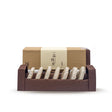
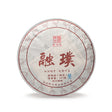
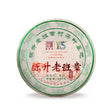
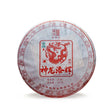



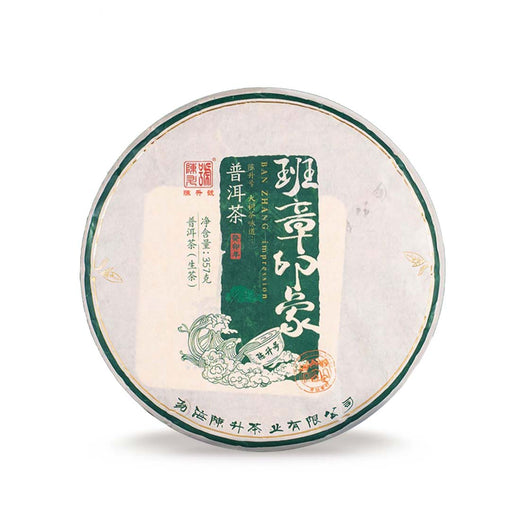


On November 1–2, 2026, the Menghai Tea Factory (勐海茶厂) of Yunnan Dayi Tea Group (云南大益茶业集团) marked its 86th anniversary in Menghai County (勐海县), Xishuangbanna. More than 300 Dayi partners from across China attended. At the event, Dayi released a new version of the tea that collectors call "Da Bai Cai" (大白菜): the Zhencang Banzhang Shengtai Cha (珍藏班章生态茶), made with leaf from the Banzhang (班章) area of Bulang Mountain (布朗山).
The new "Da Bai Cai"
"Da Bai Cai" means "big cabbage". It is not an official product name. Tea drinkers gave it this nickname because the wrapper carries a green certification mark that looks a bit like a Chinese cabbage. The nickname is now widely used in the tea trade.
What the sources report about the 2026 release:
- Batch: 2601.
- Raw material: large-leaf sun-dried maocha (晒青毛茶) from the Banzhang area of Bulang Mountain.
- Processing: made with Dayi's own tea-making craft (大益茶制作技艺), according to Xinhua.
- Described taste: the trade weekly Tea Weekly (茶周刊) describes a steady, rich smoky aroma, a bright golden liquor and a strong, full taste. Guests at the launch tasting mentioned huigan (回甘) and a thick, strong mouthfeel.
- Launched by: Zeng Xinsheng (曾新生), Dayi Group's rotating president, who said the tea is meant to "activate the existing market".
Neither source gives a price, a production quantity or plans for sale outside China.
A message about the market
The most useful part of the event for buyers may be what Dayi's chairman, Zhang Yafeng (张亚峰), said about the industry. He told partners that the old growth path no longer works. Dayi, he said, must move away from growth driven by raw-material resources and rising market prices, toward growth driven by value, capability and real consumption.
He listed four priorities:
- Set clear value standards to rebuild consumer trust.
- Make retail stores profitable, as the top strategic priority.
- Build a wider range of products for more kinds of drinkers and occasions.
- Use Menghai's growing areas and the factory's 86 years of craft as a platform for industry, culture and market exchange.
One Dayi distributor at the event urged partners to get back to drinking: to win and keep customers with a cup of well-aged tea.

Aged teas, tea gardens and local plans
On the second day, guests tasted 13 collector teas aged more than 20 years. They also visited Dayi's Banzhang estate, where they tried hand pan-firing and making bamboo-tube tea.
Xinhua reports that Dayi is working on microbial tea-making, digital warehousing and quality evaluation, and is expanding in both Chinese and overseas markets. Menghai's county head, Zeng Yong (曾永), said the county is planning a tourism loop that links its ancient tea mountains. He asked the factory to deepen its "company + cooperative + tea farmer" model so that farmers share in the value added by processing and branding.
Chen Rubo (陈汝波), president of the Yunnan Provincial Pu'er Tea Association (云南省普洱茶协会), also spoke. He credited Dayi with helping to set the value system and market rules of the pu'er industry.
What this means for pu'er drinkers
- Check the official name, not the nickname. "Da Bai Cai" covers several Dayi Banzhang teas from different years. The official name (珍藏班章生态茶) and the batch code on the wrapper tell you which tea you are buying.
- Expect a strong young tea. Banzhang raw pu'er is known for a strong, thick taste. When young it can show clear astringency and a hint of bitterness, which usually soften with storage.
- The market is cooling. When one of the best-known pu'er brands tells its partners that price-driven growth is over, it is a sign that the trade is turning back toward tea for drinking, not only tea for trading.
Keep it in perspective
This is company news. The details come from Dayi's own event, as reported by Xinhua and Tea Weekly. The tasting notes come from the trade press and invited guests, not from an independent review. Cspuerh does not sell Dayi teas and had no part in the event.
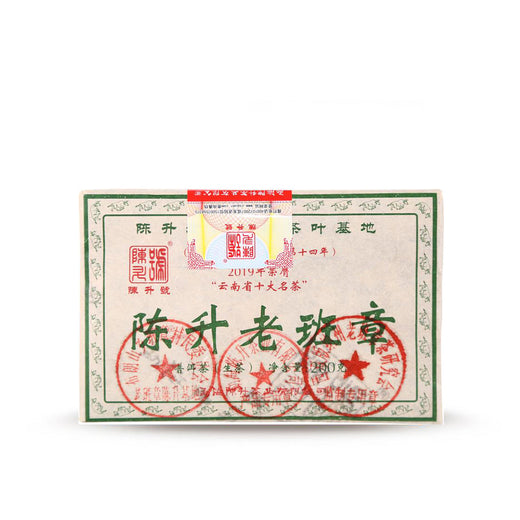
If you want to taste how Menghai raw tea changes from young to aged, our raw pu'er collection from Chen Sheng Hao (陈升号), also made in Menghai, is a good place to start, and our pu'er tasting vocabulary guide explains terms like huigan.
Source: Xinhua Yunnan, "勐海茶厂迎来建厂86周年 新版'大白菜'珍藏班章茶发布" (November 2, 2026); Tea Weekly (茶周刊), China Cooperation Times, "致敬大益86载,新版'大白菜'惊艳亮相!", via ipucha.com (November 3, 2026). Summary and plain-language interpretation by Chen Sheng Tea. Featured image: an old tea tree and tea pickers in a Yunnan tea garden (illustration, not Dayi's estate or the event). Photo: Chen Sheng Hao (陈升号).


