


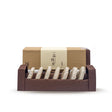
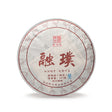
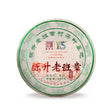
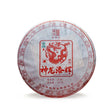
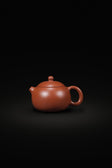





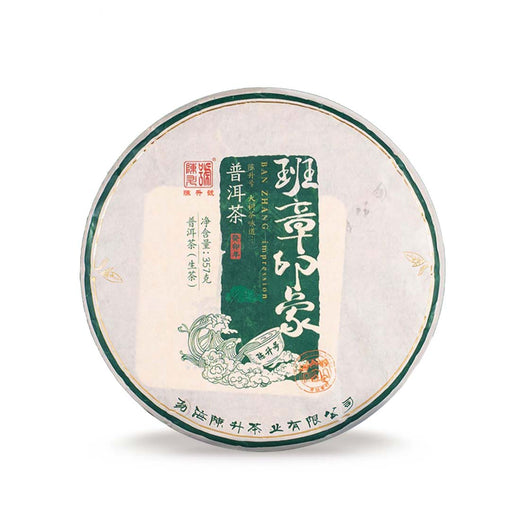
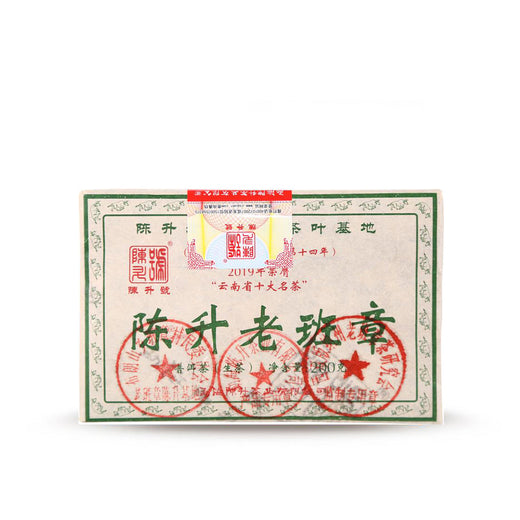


Every Chen Sheng Hao pu-erh starts as fresh leaf picked by hand in spring. In the village it becomes sun-dried maocha; at our factory in Menghai it is sorted, pressed, dried and wrapped. Raw pu-erh goes straight from maocha to the press. Ripe pu-erh first spends about 45–60 days in a fermentation pile. This article walks through each step, in order, with photos from our gardens and factory.
What makes a tea pu-erh
Pu-erh is made from the large-leaf tea variety (Camellia sinensis var. assamica) grown in Yunnan. It is a geographical-indication product, so only tea from specific areas of Yunnan, made in the traditional way, can carry the name. There are two kinds. Raw (sheng) pu-erh is sun-dried maocha that is pressed and then ages slowly over years. Ripe (shou) pu-erh is maocha that is pile-fermented before pressing, a method developed in Yunnan in 1973. If you are choosing between them, read raw vs ripe pu-erh.
Part 1: From fresh leaf to maocha
The first steps happen close to the gardens, in the first-processing workshops we run with the farmers in our partner villages. Speed matters here: fresh leaf has to be processed the day it is picked.
1. Picking
Our main harvest is in spring. Farmers pick by hand from old-arbor trees and from the gardens of our partner bases, such as Lao Ban Zhang, Nannuo and Na Ka. We buy the fresh leaf directly from them under long-term agreements.

2. Withering
The fresh leaf is spread thinly on bamboo trays and left to rest. It loses some moisture and turns soft, which makes it easier to fire and roll without breaking.
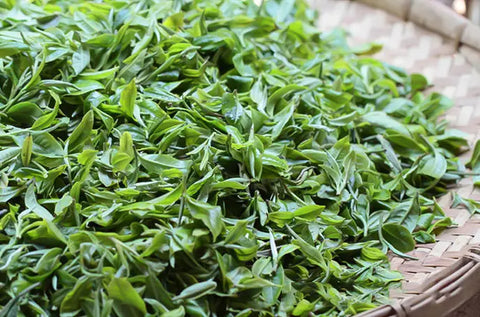
3. Kill-green (sha qing)
The softened leaf is pan-fired. Heat stops the enzymes in the leaf from oxidizing it the way black tea is oxidized, and it fixes the leaf's green character. The worker keeps the leaf moving so it heats evenly and does not scorch.
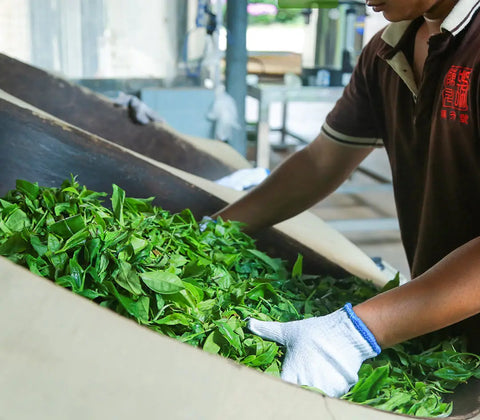
4. Rolling
After firing, the leaf is rolled and twisted. This shapes it into strips and breaks the cell walls slightly, so the leaf releases its flavor into the liquor when you brew it.
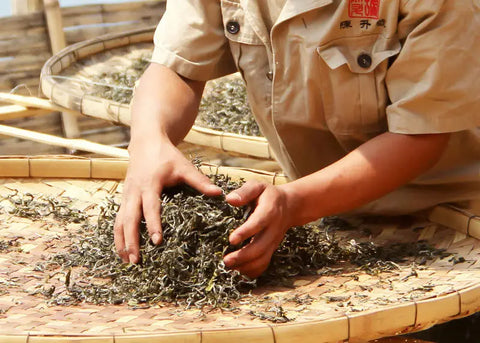
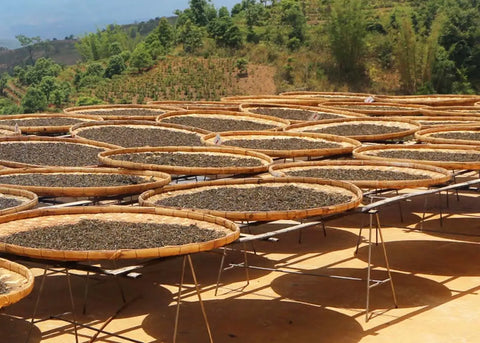
5. Sun-drying
The rolled leaf is spread on bamboo trays in the open air and dried in the sun. The result is maocha, the loose, sun-dried tea that is the raw material for every pu-erh. Sun-drying, rather than drying with high heat, is what lets raw pu-erh keep changing as it ages.
Part 2: Making raw pu-erh at our factory
The maocha then comes to our factory in Menghai, where it is checked, cleaned, pressed and packed.
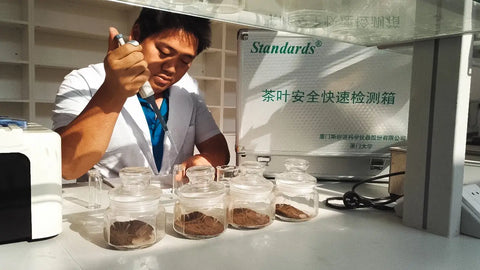
6. Checking
Before processing, samples of the maocha are checked in our lab for quality and safety.
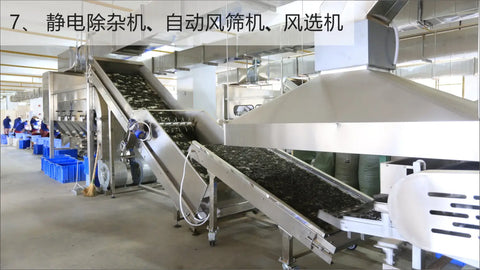
7. Machine sorting
The maocha runs through a sorting line. An electrostatic machine removes dust, hair and other impurities, and air sieves separate the leaf by size and weight.
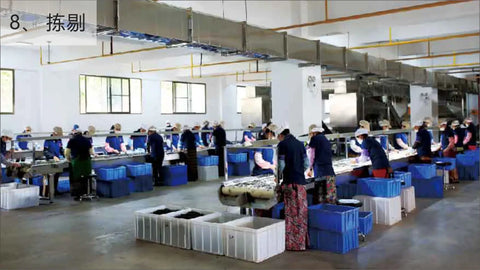
8. Hand sorting and stem-picking
Machines cannot catch everything. Our workers go through the leaf by hand at long tables, picking out stems, yellow leaves and anything that does not belong.
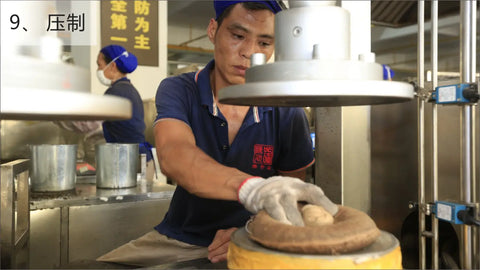
9. Steaming and pressing
A measured portion of leaf is steamed briefly so it turns soft and slightly sticky. It is then put into a cloth bag and pressed into a cake, brick or tuocha. The pressed tea rests in its bag for a short time to hold its shape.
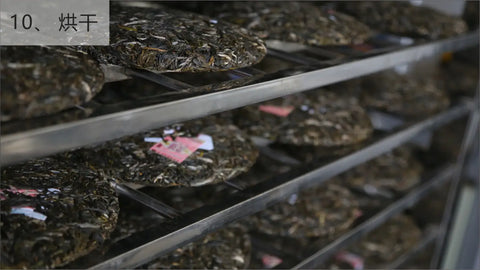
10. Drying
Freshly pressed cakes still hold moisture from steaming. They are laid on racks in a drying room and dried slowly at a gentle warmth until the moisture is low enough for safe storage.
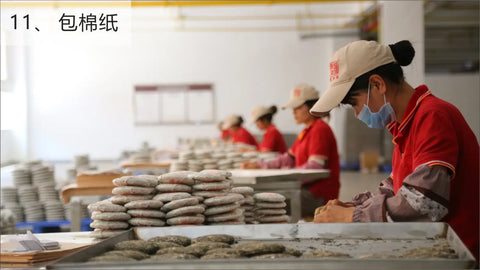
11. Wrapping
Each dry cake is wrapped by hand in cotton paper. The paper protects the cake but still lets it breathe, which raw pu-erh needs to age.
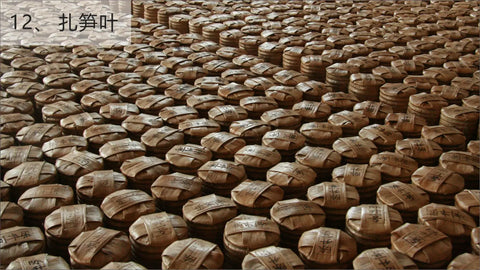
12. Bamboo-leaf bundles
Seven wrapped cakes are stacked into a tong and tied in a bamboo-leaf wrapper. This traditional packing keeps the cakes together and protected in storage.
Part 3: How ripe pu-erh is different
Ripe pu-erh starts from the same sun-dried maocha. The difference is one long extra step before pressing.
- Pile fermentation (wo dui). The maocha is moistened and heaped into a large pile. Warmth builds inside the pile and the leaf ferments. Workers turn the pile regularly so it ferments evenly. This takes about 45–60 days, and the leaf turns from green-brown to dark reddish brown.
- Drying. When fermentation is complete, the pile is opened and the leaf is spread out to dry.
- Sorting. The fermented leaf is sorted by machine and by hand, just like raw maocha, and graded by leaf size.
- Pressing. The leaf is steamed, pressed, dried and wrapped in the same way as raw pu-erh (steps 9 to 12 above).
The result is a dark, mellow tea with a deep red liquor that is ready to drink soon after it is made. It still mellows further over the first few years.
Our no-ground-contact method
When we opened our new factory in 2015, we set a simple rule: from withering to pressing, the leaf never touches the floor. It moves on trays, racks, tables and conveyors instead. We call this our no-ground-contact method. It keeps the leaf clean at every step, and it is one of the things we are proudest of in our production.
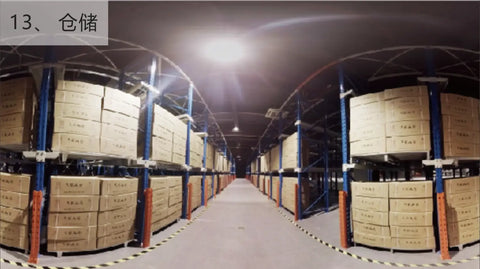
Storage at Chen Sheng Storage
Finished tea goes to Chen Sheng Storage, the climate-controlled warehouses we opened in 2016. Temperature and humidity are controlled around the clock, so the tea ages steadily before it reaches you. To keep your own cakes in good condition at home, see how to store pu-erh tea.
China Green Food certified
Our teas are China Green Food (绿色食品) certified. The certification covers how the tea is grown and processed. You can learn more about how our company started, and the villages we work with, on our About Chen Sheng Hao page.
We make old-arbor tea, and we take the time to make it right. You can taste the result in our raw pu-erh collection.


